
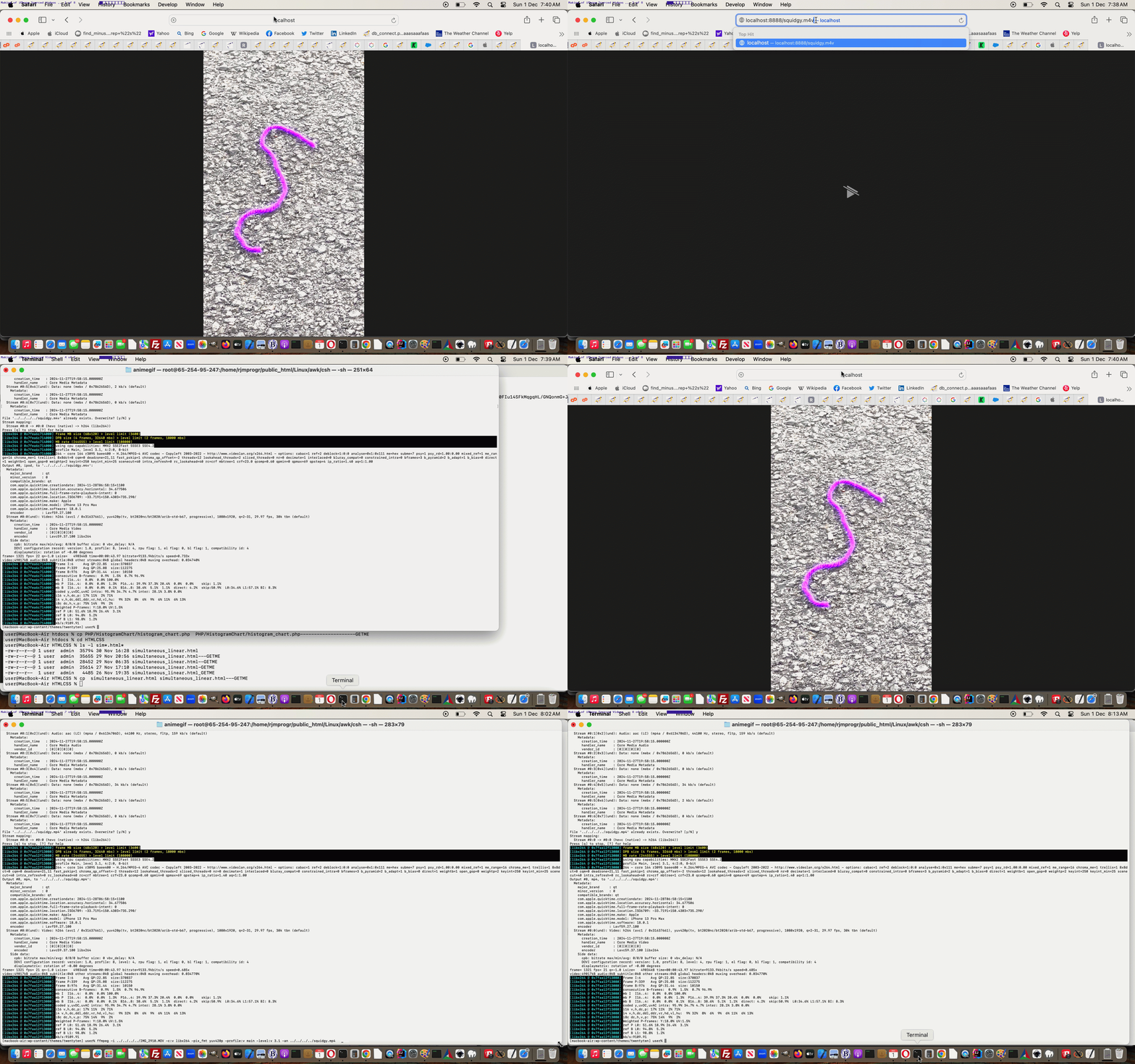
Making of iPhone Videos Play Around the Traps Tutorial
Especially as far as video creation goes with the set of web browser brands, on mobile and non-mobile platforms, going around, it can be valid to ask …
Does it play everywhere?
… because it’s surprising what can arise sometimes.
During last week we had one happen, where our …
- original MOV video the iPhone (Camera app in Video mode) created … and we AirDroped to MacBook Air (macOS) …
- converted via (macOS command line) …
ffmpeg -i IMG_2910.MOV squidgy.m4v
… - and then played, online, via …
<video style="width:100%;" controls><source type=video/mp4 src=/squidgy.m4v></source></video>
…“crashed and burned”just, quietly, didn’t play on any Safari incarnation of web browser, though did for Google Chrome, for example
… so annoying!
We asked the Open Source community, no doubt, and we liked this great advice, to, at first, try (on macOS command line) …
ffmpeg -i IMG_2910.MOV -c:v libx264 -pix_fmt yuv420p -profile:v main -level:v 3.1 -an squidgy.m4v
… creating a different set of problems, until we went …
ffmpeg -i IMG_2910.MOV -c:v libx264 -pix_fmt yuv420p -profile:v main -level:v 3.1 -an squidgy.mp4
… teamed with the blog posting video playing HTML …
<video style="width:100%;" controls><source type=video/mp4 src=/squidgy.mp4></source></video>
… as per …
… instead, to make everyone browser happy (as well as any readers of HTML/Javascript Scratchpad Simultaneous Line Equations Hints Revisit Tutorial who persisted)!
Yes, but thinking on it, those early readers will have noticed audio present on that previous video incarnation. We wanted to get it back, and it contextualizes things. Well, we went back to the source (but didn’t ask any horses) to use ffmpeg to extract an audio “track” if you will, via …
ffmpeg -i IMG_2910.MOV squidgy.m4a
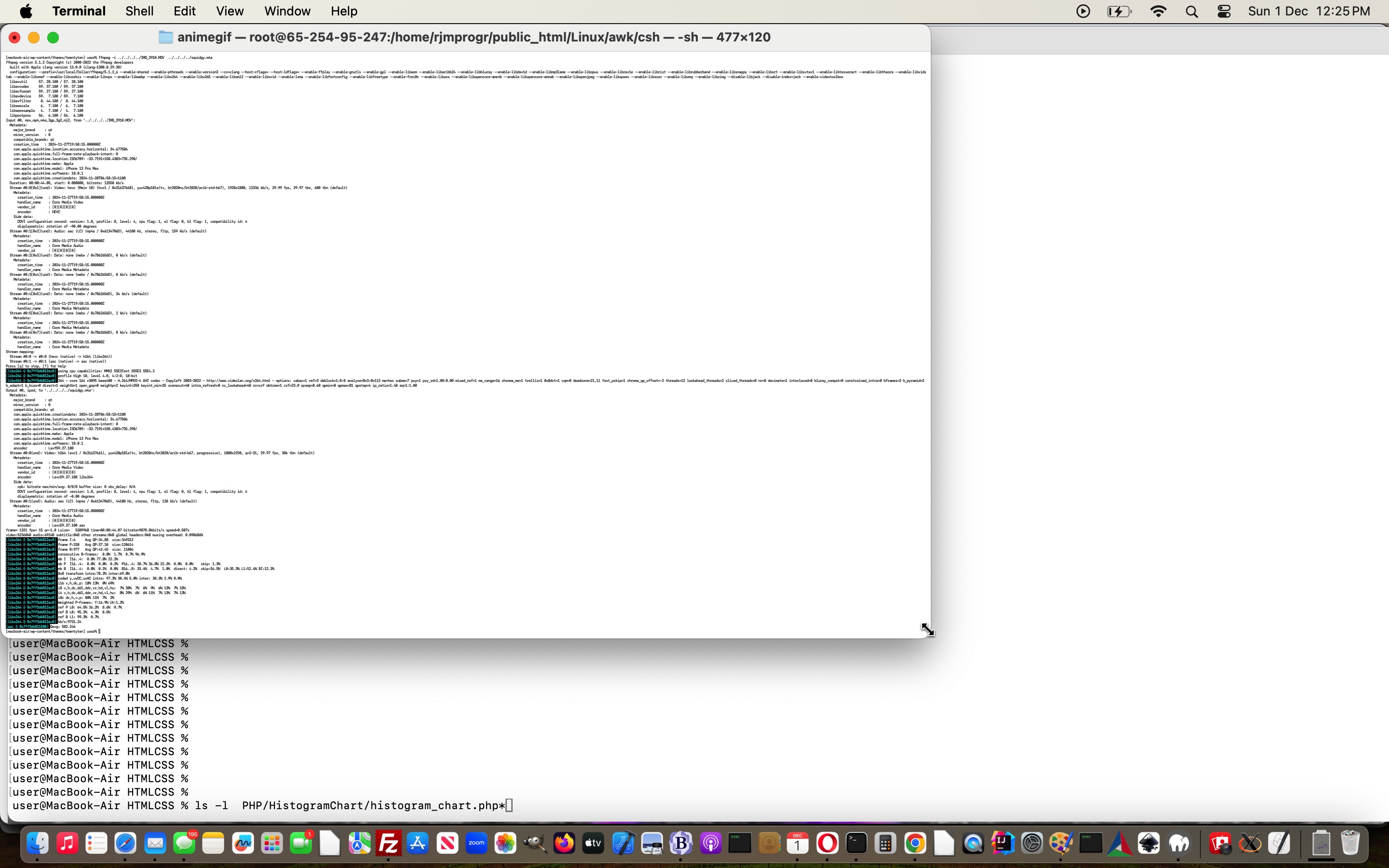
… and uploaded this, then looked for help and found this great link, thanks, getting us to …
<video id=myvideo style=width:95%; controls>

<source type=video/mp4 src=/squidgy.mp4></source>

<audio id=myaudio>

<source type=audio/mp4 src=/squidgy.m4a></source></audio>

<script>

  // Thanks to https://stackoverflow.com/questions/6433900/syncing-html5-video-with-audio-playback

  var myvideo=null, myaudio=null, change_time_state=true;

  function syncit() {

    myvideo = document.getElementById("myvideo");

    myaudio = document.getElementById("myaudio");

    change_time_state = true;

    myvideo.onplay = function(){

        myaudio.play();

        if(change_time_state){

            myaudio.currentTime = myvideo.currentTime;

            change_time_state = false;

        }

    }

    myvideo.onpause = function(){

        myaudio.pause();

        change_time_state = true;

    }

  }

  setTimeout(syncit, 5000);

</script>

</video>
… as per …
… to help, more, with context.
If this was interesting you may be interested in this too.




Naming the things in a bathroom is a smarter vocabulary exercise than it first looks, because every learner already knows the room, so the words attach to objects they can see and touch instead of floating on a flashcard. Asking how many things can you name turns it into a game rather than a test, and the counting itself becomes the motivation: one more word than last time is a visible win. I like the way this kind of lesson uses a photograph as the prompt, since a picture gives every student the same starting point regardless of level, and the stronger students can move on to describing what each thing is for while beginners are still collecting nouns. The bathroom is a good choice of room too, because it is full of everyday words that textbooks often skip, the small objects people actually say out loud every morning. A daily habit of naming five new things around the house would build a working vocabulary faster than memorising lists, and this post is a good template for it.